
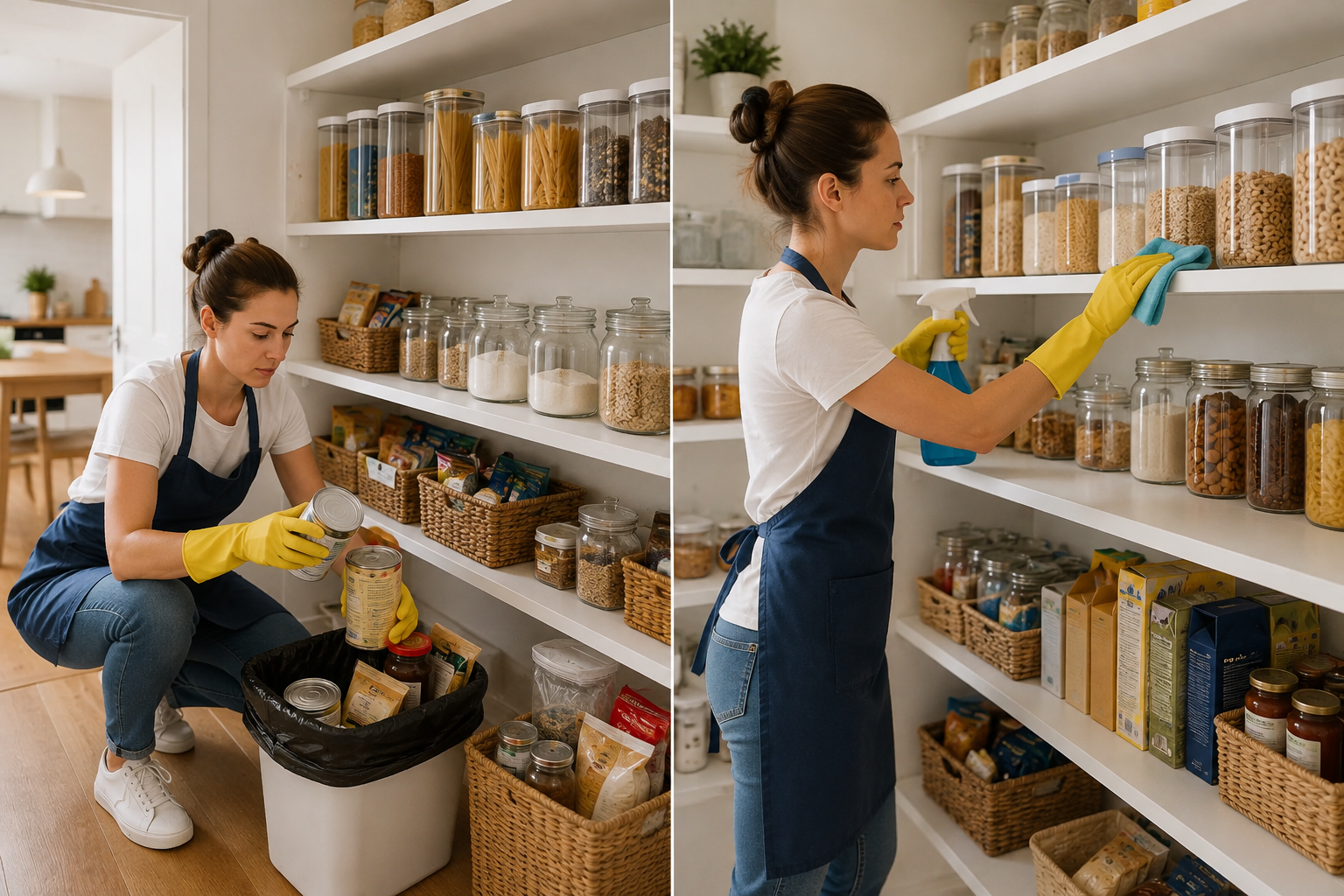
Our pantry most likely houses some forgotten stuff that we bought but forgot to use. We find cans in the corners of the pantry, opened bags that we can’t even identify, and spices that are older than we think. It takes roughly one hour to do and is well worth your time. You will find cooking simpler, save yourself some money, and won’t eat anything expired. Here is a guide on what to throw away, what to clean and where everything should go.
Where Do I Begin?
The first step is to remove all items from the pantry. This will give you an accurate idea of what you really have. Place all the items on the counter or table and make sure you have a garbage bag handy. Clean the shelves with warm, soapy water after removing the food items.
What Items Should I Toss?
If there are any signs of insect infestation. Any holes in the packaging, webbing, or presence of pests or moths are definite signs of throwing away the food item. Check your flour, rice, cereals, and pasta first, as these food items are the favorite of the insects.
Cans that are swollen, dented or leaking. If you have a can with a swollen lid or a dented lid, then the food is to be thrown away. However, a little dent on the side of the can is not harmful.
Any can that is swollen, has a leak, or is heavily dented. The swollen lid or the dent along the seam means that the can should be thrown away. Otherwise, a small dent on the sides is not a problem.
Rusty cans: If the rust is minimal and wipes off easily, then it is okay. Otherwise, throw the can away.
Rancid or stale oils and nuts: Give it a smell. If it smells of paint or crayons, it is rancid. It will not always make you ill, but it tastes bad.
Flour or baking mixes: The white flour is usable for 6 to 8 months, while the whole wheat one goes bad more quickly because of the natural oils. Both types need to be replaced if they smell sour or moldy.
Baking powder and baking soda which stopped being active: You should test baking powder by adding it to the hot water. If nothing happens, replace it. You should do the same with the baking soda, but use the vinegar instead of water.
Old spices: Ground spices expire within 2 to 3 years, and whole spices last slightly longer. They are not considered to be harmful but rather ineffective; if using 3 times more than usual to get any taste out of them, replace your spices.
Products with mold or an off smell. Do not attempt to save them. Mold in porous food can go further than seen by the eye.
Opened products that were meant to be refrigerated. Remember that jar of sauce or peanut butter with instructions “to refrigerate after opening” that sat in the store for a month?
But Do I Need to Respect the Dates on the Package?
No, not really. “Best by” or “use by” dates pertain more to product freshness than anything else. Crackers that are several weeks past their dates will simply be stale. Use your senses rather than relying strictly on the dates. Of course, there is always one exception: baby formula.
What Can I Just Wipe Down?
A number of items require very little and just have to be cleaned. In order to know what this involves in relation to your kitchen cleaning process, check out this complete kitchen cleaning checklist which touches on all areas and not just the pantry.
Cans and jars: These have to be wiped with a damp cloth. Dirty honey bottles and dusty cans are among the most common messes found here.
Oil, syrup, and sauce bottles: The drips collect around the necks and therefore require wiping down to avoid attracting insects.
Containers and canisters: These have to be washed and dried prior to re-filling.
What About Putting Things Back in Order?
And here is the section that will help keep the pantry from getting disorganized.
Group items by kind: For instance, baking, breakfast, snacks, canned foods, pasta, and grains.
Place older products in the front: Place new ones at the back.
Transfer opened bags to sealed containers: It will help keep the food fresher and pests away.
Label everything with the date: Mark down the date when you have purchased or opened the item.
Place the items you use daily on eye level.
How Often Should I Clean Out My Pantry?
You don’t need to do a full cleanout every month. Do a quick check every few months and a deeper one once or twice a year. Not sure how the two differ? Here’s a simple breakdown of regular cleaning vs. deep cleaning to help you decide what your pantry needs. Before a big grocery trip is a good time, since you’ll know what you already have.
A clean pantry saves money, cuts down on waste, and makes it a lot less annoying to figure out what’s for dinner.

