
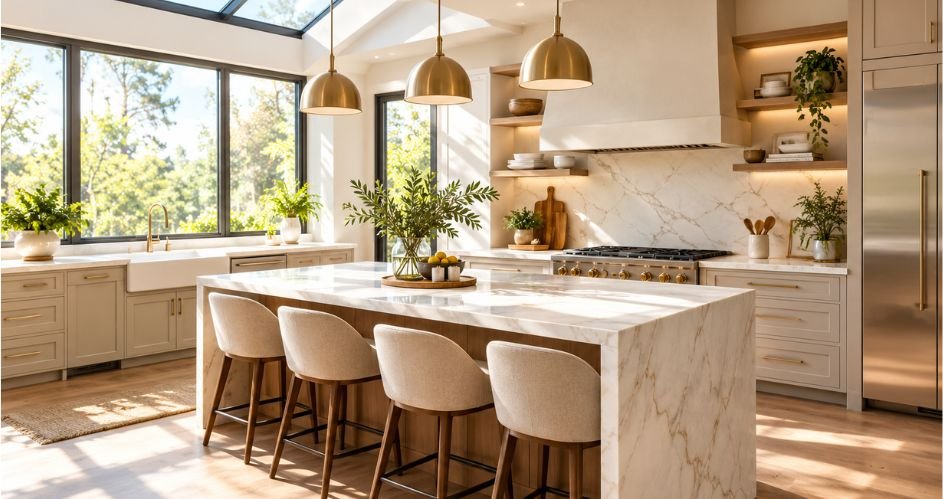
Natural light is one of the most valuable materials in a luxury kitchen. Daylight softens stone, warms wood, and makes even a compact layout feel open. When windows, skylights, and reflective surfaces are planned alongside cabinetry from the start, the room works well from morning coffee to evening dinner.
Experienced kitchen designers in Toronto treat daylight as a design driver rather than a happy accident.
Why Light Belongs in the Design Brief
A high-end kitchen should look beautiful, but it also has to support real cooking. Harsh overhead lighting alone can flatten materials and create glare on glossy surfaces. Daylight shows the true colour of counters and cabinet finishes, improves visibility at the sink and prep areas, and connects open-concept homes to the garden or skyline beyond.
Orientation, Windows, and Work Zones
Every exposure behaves differently. South and west windows bring strong afternoon sun, east light is gentle for breakfast routines, and north light stays steady through the day. That orientation should guide where the prep counter, island, and seating face.
- Sink and prep: Place the main work run where daylight reaches it without casting your own shadow.
- Island: Keep sightlines to windows so the cook and guests share the brightest part of the room.
- Tall storage: Put pantry walls where they will not block the best light.
- Reflective surfaces: Pale stone, soft-sheen lacquer, and glass fronts bounce light deeper into the plan.
Cabinetry and Finishes That Work With Daylight
Strong sun can fade some finishes over time, so UV-stable materials and thoughtful window treatments protect the investment. Matte and satin surfaces often look more refined in daylight than high gloss, which can mirror glare.
Clean-lined European cabinetry, such as Downsview kitchens, is worth viewing under natural light before you commit, so grain, paint colour, and stone veining match how the room will feel at home.
Layering Artificial Light
Even the brightest kitchen needs evening light. Recessed ambient fixtures, under-cabinet task strips, and pendants over the island each play a role. Dimmers keep the mood flexible for weeknight cooking and weekend entertaining. The goal is continuity: artificial light that echoes the warmth of daylight so finishes look consistent after sunset.
Planning Light From the Start
Bring photos of your existing windows and notes on how you use the room across the seasons to your first design meeting. Testing layouts with 3D visualization helps natural light, cabinetry, and workflow support each other.
FAQ
Should a luxury kitchen maximize every window?
Not always. Balance glass with wall space for storage and appliances, and prioritize daylight on key work zones.
Can dark cabinetry work in a bright kitchen?
Yes. Deep tones look rich when daylight and layered lighting keep textures readable.
Are skylights a good idea in a kitchen renovation?
They can be, when structure, waterproofing, and heat gain are properly designed.

